

The Private Ritual: On Dressing with Intention and the Quiet Power of Showing Up as Yourself

There is a moment, before the day begins, that most people move through without much consideration. The wardrobe is opened. A choice is made. Something is put on. And then the day starts.
For some women, that moment is not so quick. It is the first decision of the day, and like all first decisions, it sets a tone. It is a question asked of the self before any external demands arrive: who am I today, and how do I want to move through the world? The answer is expressed not in words but in fabric and silhouette and the particular quality of attention brought to the act of getting dressed.
This is what intentional dressing means. Not the curation of a capsule wardrobe according to a formula. Not the performance of a particular aesthetic for social consumption. The private, deliberate, entirely personal act of choosing how to present yourself to the world, and the quiet power that comes from making that choice with care.
What Intentional Dressing Actually Is.
Intentional dressing is not the same as dressing well, though they often overlap. It is not the same as having a good wardrobe, though that helps. It is not a set of rules about what to buy or what to wear together or what colours suit which complexion. It is, more fundamentally, a relationship between a woman and her clothes, characterised by awareness rather than habit.
The woman who dresses intentionally knows why she is choosing what she is choosing. She might not articulate it in those terms, might not think about it consciously at all, but the choice is made with an internal coherence that reflects something true about who she is and how she is approaching the day ahead. She is not dressing to be noticed. She is not dressing to conform. She is dressing for herself, from a position of genuine self-knowledge.
This sounds simple. It is, in practice, one of the rarer things.
When No One Is Watching.
The most honest test of intentional dressing is the day when no one will see you. The working day at home. The Saturday spent alone. The morning when the only audience is the mirror and, beyond it, yourself.
Most people dress differently on those days, and the difference is revealing. The clothes reserved for visibility and the clothes worn in private are often, in wardrobes built on habit rather than intention, almost entirely different categories. The former are curated. The latter are default.
The woman who dresses intentionally makes no such distinction. She chooses with the same care on Wednesday morning when she is working alone as she does on Thursday afternoon before she walks into a room. Not because she is performing for an invisible audience, but because the care is for her own sake. Because the way she dresses is an expression of who she is, not of what she wants others to see. Because she understands, without having to think about it, that how you present yourself to yourself matters.
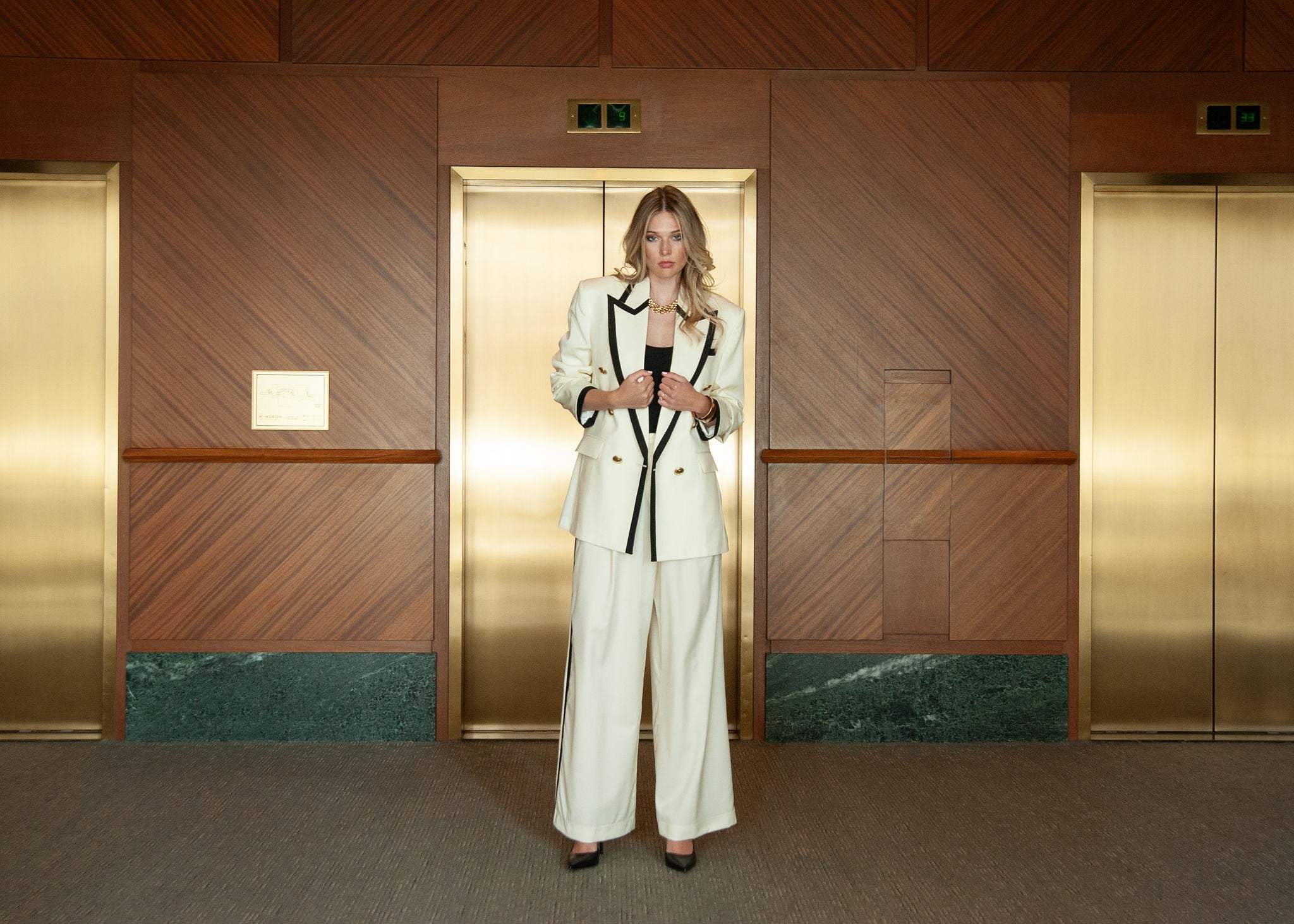
The private wardrobe is where the real relationship with clothes becomes visible. It is also where intentional dressing begins.
Your Story in Fabric
No wardrobe exists in isolation from the life that built it. The clothes you wear are fed by your personal history, by the places you have lived and the contexts you have moved through, by the women you have admired and the ones you have decided not to resemble, by your understanding of your own body and your relationship with it over time.
That history is present in the choices you make, whether you are conscious of it or not. The woman who grew up around tailoring moves differently in a well-cut blazer than a woman encountering it for the first time. The woman who spent years in a professional environment that required a certain kind of dress has a different relationship with structure and formality than the woman who has always worked in creative spaces. These histories are not constraints. They are materials.
Intentional dressing is, in part, the act of understanding your own sartorial history and choosing, consciously, which parts of it to carry forward and which to leave behind. It is the decision to dress not from habit or obligation but from genuine knowledge of yourself, which is a form of knowledge that deepens over time.
The Quiet Power.
There is something that happens when a woman walks into a room having made a considered choice about how she is dressed. It is not the same as being well-dressed in the conventional sense, though it may produce the same visible effect. It is a quality of presence, of self-possession, of being entirely at home in your own appearance. Other people register it, often without being able to say precisely what they are responding to. The woman herself is usually aware of it, in the same way you are aware of standing well: not as a performance, but as a fact.
This is the quiet power of intentional dressing. It is not the power of displaying wealth or status or adherence to a trend. It is the power of self-knowledge made visible. Of a woman who has decided, with complete calm, who she is and how she wants to show up. That decision is legible in everything she wears, and it is not something that money alone can produce.
Beyond the Trend
Quiet luxury, the term that has become the shorthand for the aesthetic that intentional dressing tends to produce, is better understood not as a trend but as a consequence. It is what happens when a woman stops dressing for the external validation of a current moment and starts dressing from a stable internal position. The clothes that result tend to be well-made, restrained, chosen for quality and longevity rather than novelty. They do not chase the season. They outlast it.
UNROOTD CHAPTRS was built on this idea. That fashion can be something other than a seasonal obligation. That a piece of clothing can carry a story, reflect a personal history, and remain relevant not because it is timeless in the abstract but because it is right for the woman wearing it, specifically and without compromise. From Paris to London is designed for women who dress with intention, for themselves, on the days when no one is watching and the days when everyone is.
Getting dressed is the first decision of the day. It is worth making it well.