


Pick up a garment labelled Made in France and hold it. The weight is different. Not necessarily heavier, though often it is. The difference is in the quality of that weight, in how the fabric settles against your hand rather than resisting it, in how the stitching sits level and even and permanent. You are holding something that passed through a great number of skilled hands before it reached yours, and that fact is present in the object itself.
France has been the centre of the global fashion industry for more than three centuries. That position was not achieved through branding alone. It was built on the accumulation of technical knowledge, passed from hand to hand across generations of craftspeople, refined continuously in workshops and ateliers scattered across Paris and the regions surrounding it. Understanding what Made in France means requires understanding what that accumulation actually produced.
The French atelier system has its origins in the guild workshops of the seventeenth century, when Louis XIV's finance minister Jean-Baptiste Colbert recognised that luxury craft was not simply a cultural achievement but an economic one. The establishment of the Manufacture Royale, and the formalisation of the guild structures that governed weaving, embroidery, tailoring, and lacemaking, created the conditions under which extraordinary technical skill could be cultivated and sustained over time.
By the late nineteenth and early twentieth century, Paris had become the unchallenged capital of global fashion. The great couture houses that defined this rise were not simply the work of individual designers. Charles Frederick Worth established his maison in 1858, creating the template for the modern fashion house. Paul Poiret opened his salon in 1906; Madeleine Vionnet founded her house in 1912; Gabrielle Chanel opened her first shop at 31 Rue Cambon in 1910. Each was an institution built on the labour of hundreds of skilled artisans: the petites mains who executed the embroidery, the tailleurs who constructed the jackets, the flou specialists who worked with delicate fabrics. The garments they produced could not have been made anywhere else, because the knowledge required to make them existed, in its fullest form, only in France.
A French atelier is not a factory. The distinction matters. A factory optimises for volume, consistency, and speed. An atelier optimises for quality, and the pace of work reflects that priority. Patterns are graded by hand. Fabric is cut with the grain assessed and respected. Seams are pressed at each stage of construction rather than only at the end. Finishing is attended to with the same degree of care as the initial cut.
The people who work in French ateliers carry specific knowledge that takes years to acquire. A good tailor understands how a particular weight of wool will behave over time, how much ease to allow in the shoulder of a double-breasted jacket so that it sits correctly when buttoned, how the lining should be attached so that the garment moves with the body rather than against it. That knowledge is not written down in manuals. It is embodied, and it is transmitted through apprenticeship and practice over a long period of time.
Every piece in From Paris to London by UNROOTD CHAPTRS is made in France, in our atelier in Lyon, which operates within this tradition. Blazers, trousers, skirts, and shirts — each constructed in noble materials, each held to the standards described above. The choice to produce exclusively in France was not made for its prestige. It was made because the standard of craftsmanship that our atelier in Lyon maintains is the standard the collection requires.
When the label is earned, it belongs to the garment, not to the marketing. It is legible in the weight of the fabric, in the precision of the seam, in the particular stillness of an object made by someone who cared about making it well.
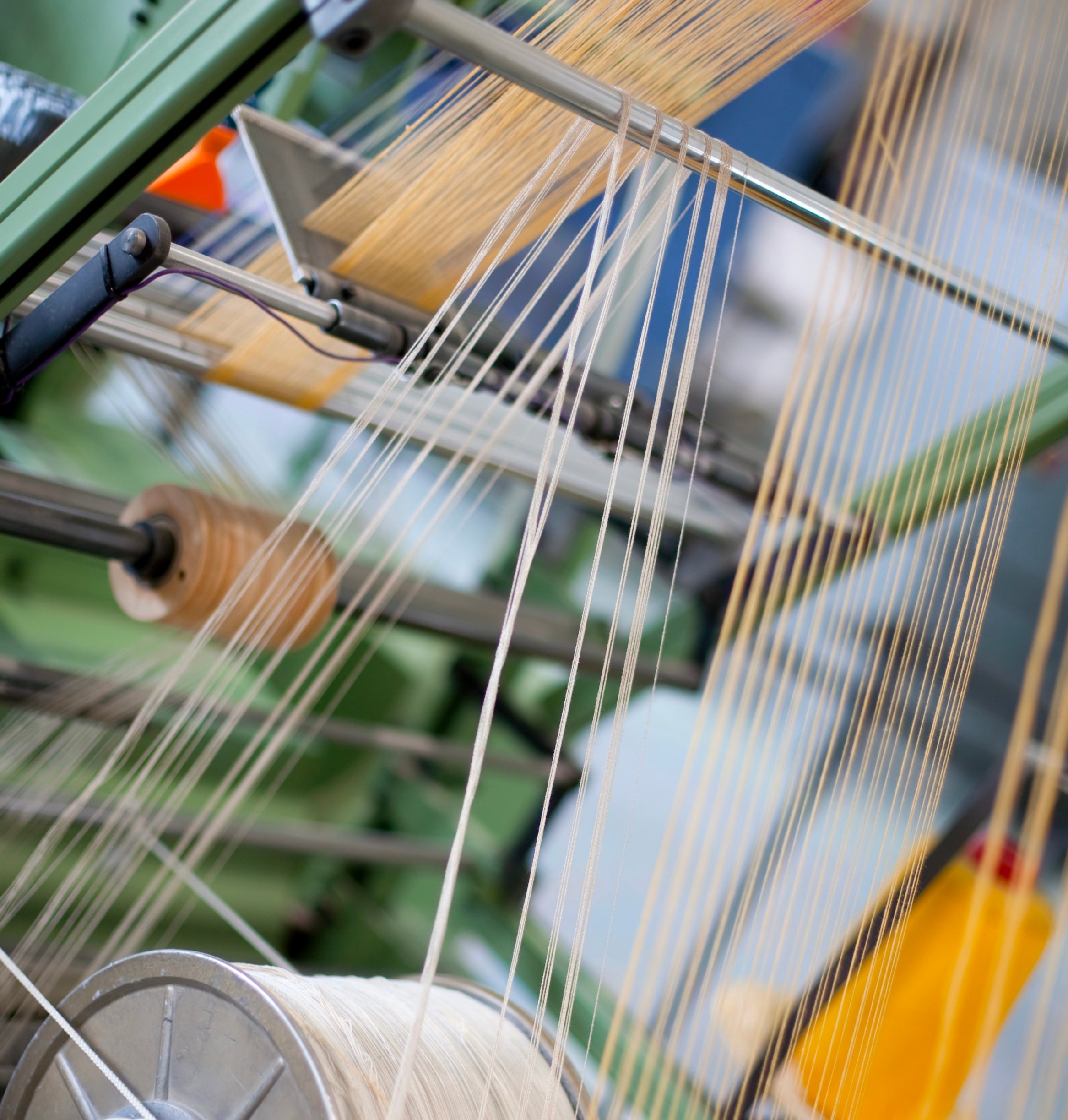
French craft does not begin when the needle enters the fabric. It begins with the choice of fabric itself, and that choice tells you almost everything you need to know about what the maker intends.
Virgin wool is the foundation of the blazers and trousers in the From Paris to London collection: a natural fibre with a long history in tailoring precisely because it performs beautifully over time. It drapes with a weight and fluidity that synthetic alternatives cannot replicate. It responds to pressing and shaping in a way that reveals the craft invested in making it, and it ages gracefully, softening with wear rather than deteriorating under it. Where the design calls for contrast and refinement, silk appears: at the wide collar of The Mayfair, at the cuffs of The Chelsea and The Bloomsbury. Silk is among the most demanding materials in fashion to work with, and its presence in a garment is felt before it is seen, in the weight of a collar as it settles, in the way fabric catches and releases light at different angles.
For the shirts, the choice is GOTS-certified organic cotton: grown without synthetic pesticides, processed and certified at every stage of the supply chain, from the field to the finished garment. GOTS certification is not a label applied at the end of production. It is a standard maintained throughout, and the quality that results from it is, like the quality of the virgin wool and the silk, present in what you are holding.
The French atelier is under pressure. The economics of fast fashion have created a global manufacturing landscape in which the production of a garment has been optimised almost entirely for cost and speed, with quality treated as a variable rather than a requirement. Ateliers that cannot compete on price have closed. Skills that took generations to develop have, in some cases, been lost.
Against this, there is a countermovement, quieter and more considered, composed of brands and consumers who have decided that the race to the bottom is not one worth winning. Choosing a garment made in France, made in an atelier, made from materials selected for their quality rather than their cost, is not simply a consumer preference. It is a position. It says something about what you believe fashion is for, and about what you want the objects in your life to be.
Every piece in From Paris to London by UNROOTD CHAPTRS was designed to last. Not to last a season, or two, or until the trend moves on. To last in the way that well-made things last: becoming more themselves with time, accumulating the particular character that only wear and care can produce. The fabrics were chosen for their quality and their longevity. The construction was entrusted to our atelier in Lyon, which understands the difference between a garment that holds together and a garment that holds up.
That distinction — between holding together and holding up — is what Made in France means, when the label is earned.